
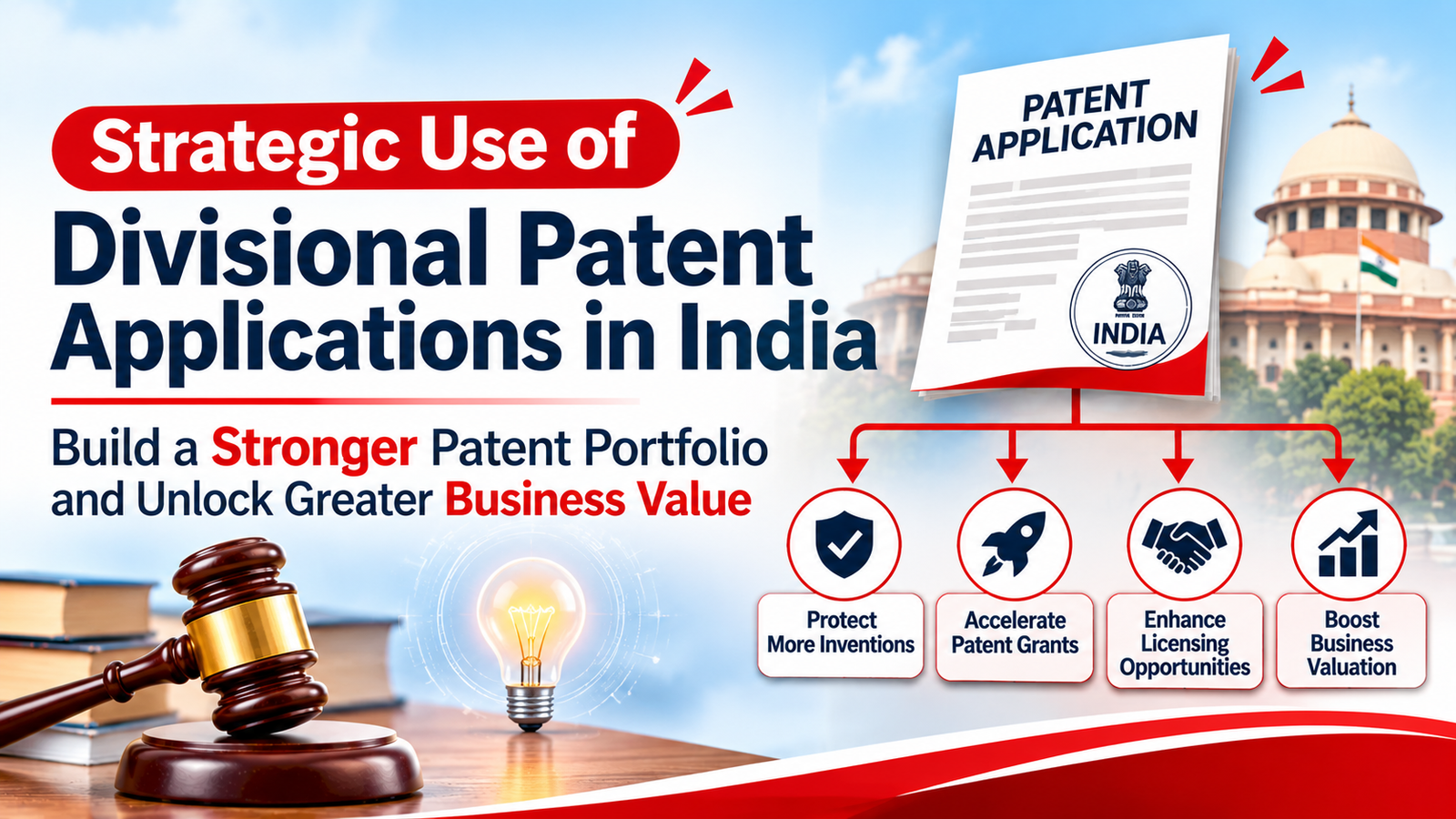
In recent times, innovative businesses often use divisional patent filings in India as a reactive measure to overcome objections during examination; savvy IP professionals are using provisions of section 16 of the Patents Act as an offensive weapon to create unbreachable barriers to entry. Businesses can therefore capture market value as it emerges without losing their original priority date.
Recent changes in law mean that businesses have much more scope to use patent portfolios in India to their advantage. Intelligent filers are turning previously unused text from the specification into income-producing assets. Understanding this will allow inventors to stay one step ahead of their competitors in fast-moving industries.
Transforming Unclaimed Disclosures into Market Moats
Conventionally, patent examiners did not allow voluntary divisional applications if the parent claims did not specifically mention different inventions. Fortunately, this has been changed by the Delhi High Court’s landmark Syngenta decision. Now, with a post-Syngenta divisional patent application strategy in India, applicants can extract value from all aspects of their original technical disclosure.
Monetising All Technical Features: This means that businesses can now seek to protect unclaimed disclosures from the parent specification in India. This allows them to maintain the important priority date from the original application but allows them to tailor their claims to match their new commercial product. It also prevents competitors from designing around tightly defined initial patent claims.
- Capture Provisional Disclosures: File divisional applications based on distinct embodiments described in either the provisional or complete specification.
- Eliminate Claim-Scope Traps: Overcome past drafting oversights where attorneys initially claimed only a single primary embodiment.
- Block Competitor Workarounds: Draft targeted divisional claims that cover alternative technical pathways disclosed in the parent text.
- Maintain Distinct Claim Boundaries: Ensure divisional claims never duplicate parent claims so you satisfy Section 16(3) validity standards.
Executing Cascading Filings Under Rule 13(2A)
In India, you could not previously file a divisional application from a divisional application. However, with the addition of Rule 13(2A) to the Indian Patents (Amendment) Rules, 2024, IP teams can now file cascading divisional applications using Rule 13(2A) in India. This will allow IP teams to maintain open prosecution routes for many years.
This brings patent prosecution in India in line with more advanced jurisdictions. Applicants now need to be conscious of the timeline of the parent grant. All divisionals must be filed prior to the parent patent being granted. Having a good docketing system will allow applicants to create a strong multi-tier patent family from one disclosure.
- Chain Multiple Generations: File one or more divisional applications directly from a previously filed divisional application under Rule 13(2A).
- Extend Strategic Flexibility: Keep a pending application alive while early-generation patents enter the market and face real-world testing.
- Track Pre-Grant Deadlines: Submit all cascading filings strictly before the Controller grants or refuses the immediate parent application.
- Reference Original Numbers: Include specific cross-references to the original application number in every new Form 2 specification.
Accelerating Patent Grants Through Strategic Bifurcation
Bifurcation of Controversial Claims: In most cases, a single set of broad or grey-area claims sparks disagreement between the applicant and the examiner, holding up a complicated patent application during prosecution in India. However, by using divisional applications to request an accelerated grant, applicants can secure quick approval for uncontroversial claims while the examiner reviews the complicated claims separately.
Start-ups and enterprises will benefit from the quick grant of the patent, giving them immediate statutory protection against potential infringers. Using a voluntary divisional application means that the applicant can make arguments for broader coverage without risking any delays to their commercial launch.
- Separate Allowable Subject Matter: Retain clear, unobjected claims in the parent application to secure an immediate patent grant.
- Isolate Complex Disputes: Move contentious claims into a separate divisional application for focused hearings and technical arguments.
- Trigger Fast-Track Examination: File a fresh Request for Examination alongside expedited processing requests for the newly divided application.
- Trigger Fast-Track Examination: File a fresh Request for Examination alongside expedited processing requests for the newly divided application.
Driving Commercial Licensing and M&A Readiness
Asset Specificity: Large patent claims often make it difficult to license IP. A business can create specific divisional patents in India by breaking down large specifications, which can then be easily licensed to different industries.
Increase Valuation at Exit. Investors and acquirers love clean patent portfolio management in India. Having specific divisional patents means that the main revenue streams are segregated, and any assets can be easily moved during mergers or spin-offs. This means that having detailed patents will increase the valuation of the enterprise.
Improved Exit Valuation: Investors and acquirers love clean patent portfolio management. With specific divisional patents, you know the main revenue streams have been separated, and any assets can be easily transferred during mergers or spin-offs. This will mean your detailed patents will improve your enterprise’s valuation.
- Carve out the vertical licenses: It drives the multi-industry inventions into separate patents tailored for healthcare, automotive or consumer markets.
- Simplify Joint Ventures: Assign specific divisional patents to strategic partners without surrendering control over core platform technology.
- Isolate Litigation Risks: Ensure a third-party validity challenge against one commercial product leaves sibling divisional patents completely intact.
- Boost Investor Confidence: Demonstrate proactive Indian patent strategy by aligning individual patent claims directly with distinct product SKUs.

Designing a Proactive Filing Checklist
Operationalising Section 16 Strategies: Successfully filing voluntary divisional patents under Section 16 in India requires tight coordination between R&D engineers and patent attorneys. First, legal teams must audit every pending parent specification well before paying the final grant fee. Next, counsel should map unclaimed embodiments against competitor product roadmaps to identify high-value targets.
However in the case of careless execution can triggers the double-patenting rejection which is under Section 16 Patents Act rules. Therefore, drafters must verify that every divisional claim defines a distinct inventive concept that the original disclosure fully supports. Finally, disciplined execution transforms Indian patent prosecution from a compliance cost into a decisive competitive advantage.
- Pre-Grant Audits- Ensure that there are no unclaimed inventions by performing a pre-grant audit of all parent specifications at least 3 months in advance of anticipated allowances.
- Confirm Specification Support: Ensure that the original specification clearly supports any proposed divisional claims.
- Budget: Budget for additional official fees for each independent divisional application, including filing, publication and examination.
- Strategic- Focus on filing divisions that will protect upcoming new products, licensing, and enforcement.
Conclusion
Divisional applications in India are no longer a reactive tool. With the support of Section 16 of the Patents Act (and the Syngenta decision) and Rule 13(2A), businesses can transform their application specifications into valuable commercial assets.
By dividing your application at an early stage, you are able to obtain fast patents for your commercial products, whilst pursuing your larger or contentious claims. Further, by submitting multiple divisional applications, you maintain flexibility and can adapt your portfolio as competitor workarounds and new business areas emerge. Having a detailed patent portfolio also makes licensing easier, improves investor due diligence and enables you to limit the risk of litigation.
For any kind of guidance and support, kindly contact Intellect Bastion LLP!
FAQs
1. Can an applicant file a divisional patent application voluntarily in India even if the Controller has not raised a unity of invention objection?
Yes. Under Section 16(1) of the Indian Patents Act, 1970, you can file a divisional application at any time before the Controller grants the parent patent. You do not need to wait for a lack-of-unity objection. However, to file voluntarily, the parent specification (provisional or complete) must disclose multiple inventions.
2. How did the Syngenta ruling and Rule 13(2A) expand strategic opportunities for divisional filings in India?
In the Syngenta Judgment (2023), the Delhi High Court dismissed Boehringer Ingelheim’s appeal and validated voluntary divisional filings. The Court held that a divisional application is valid if the specification discloses multiple inventions anywhere in the text, even outside the original claims.
Rule 13(2A): The Patents (Amendment) Rules, 2024 codified this principle. Applicants can now file one or more additional divisional applications based on inventions disclosed in the provisional, complete, or prior divisional specification.
3. Can you file a divisional patent application in India for an invention disclosed in the specification but not claimed in the parent application?
Yes. As a result of the Syngenta decision and the new Rule 13(2A), applicants can claim any unclaimed technical features, alternative arrangements or derivative inventions disclosed in the parent provisional and/or complete specification and file these as new divisional applications with the benefit of the original priority date.
4. How can divisional applications be used to speed up the grant of core claims while continuing prosecution on broader or complex claims?
If your application contains some uncontroversial allowable claims and some contentious or complicated claims, you can accelerate the processing of your patent by splitting your application into two parts:
Keep the uncontroversial, key commercial claims in your parent application so they can be granted quickly.
Split off the contentious, broad or ambiguous claims into a voluntary divisional application. This way you can argue the technicalities of those claims in detail.
Submit a request for accelerated examination (Form 18A if applicable) for your new divisional application so that the prosecution can continue quickly.
5. Are cascading divisional applications (a divisional filed out of another divisional) permitted under Indian patent law?
Yes. The Patents (Amendment) Rules, 2024 provide in Rule 13(2A) that “a further application filed under section 16”. Therefore, it is clear that cascading (2nd / 3rd generation) divisionals can be filed. However, in order to be valid, each new divisional must be filed prior to the grant of the immediate parent application, and must also relate to a novel invention based on the original disclosure.
6. How do divisional patent applications help strengthen commercial licensing, enforcement, and competitor design-around protection in India?
specification. This allows individual patents to be licensed or assigned to various partners in the industry.
Increased Enforcement Protection through having sibling divisional patents, meaning you can enforce your other patents that are not being challenged by an infringer or competitor by way of post-grant opposition or revocation.
Prevention of design-arounds by extracting embodiments from the original specification that are not claimed and creating targeted divisional applications to claim around the variations your competitors have introduced to the market. Using your original priority date
Author: Shubhra Pandey
Patent Associate