
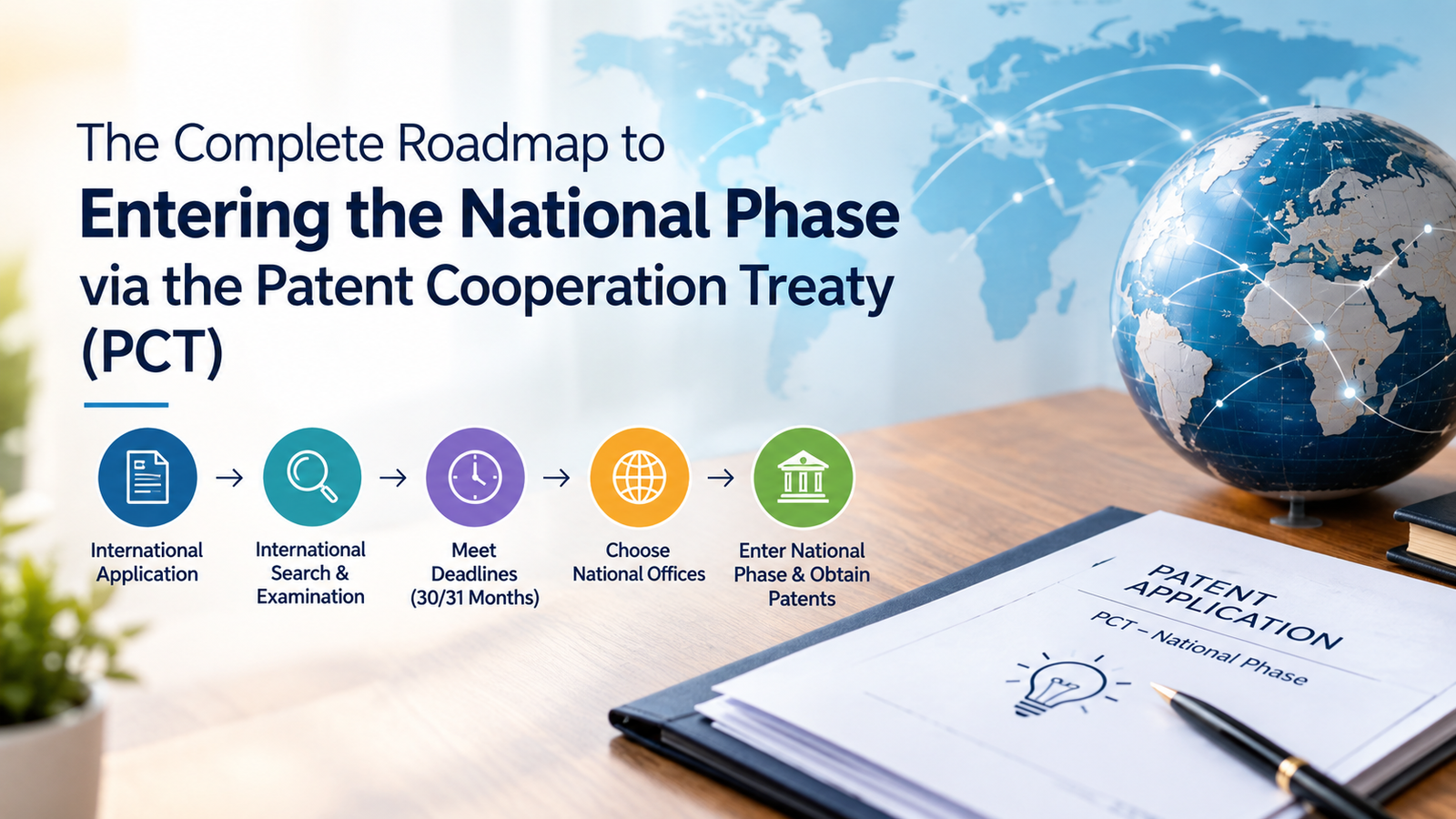
The process of applying for an international patent is a daunting one; however, applying for the PCT national phase need not necessarily be difficult. The Patent Cooperation Treaty (PCT) usually provides for a simplified process, which may motivate those people trying to get patents in various countries with a single initial application. One can file one international application initially and then go on to apply for patents in all countries simultaneously, or alternatively, he/she may file one international application and then proceed to apply for patents in selected countries.
This will enable inventors to efficiently expand their intellectual property internationally. This guide highlights several vital aspects, including deadlines and other approaches for converting the international application into national patents.
Understanding the PCT framework
The PCT system is simply a conduit through which the applicant must file the international patent application. It is essential to note that WIPO does not actually grant patents. On the contrary, the treaty offers an opportunity to standardise the process and save both time and money since it postpones the expensive phase of individual filings in different jurisdictions.
In this context, it is also vital to understand that during the abovementioned period, an international authority will examine the application and provide a patentability opinion on whether the invention disclosure meets the requirements in a chosen jurisdiction. In other words, this is a process of risk assessment that takes place before the applicant invests significantly in one specific jurisdiction.
There are multiple advantages for international authority searches for prior art:
- Single Application: It files one international application in one language to reserve the filing date across the member states.
- Unified Standard: It is the standard formalities that eliminate the need to satisfy varying local requirements, which are established early on.
- Global Reach: It provides access to over 150 contracting states through a streamlined international administrative framework.
How does the PCT Patent Roadmap work?
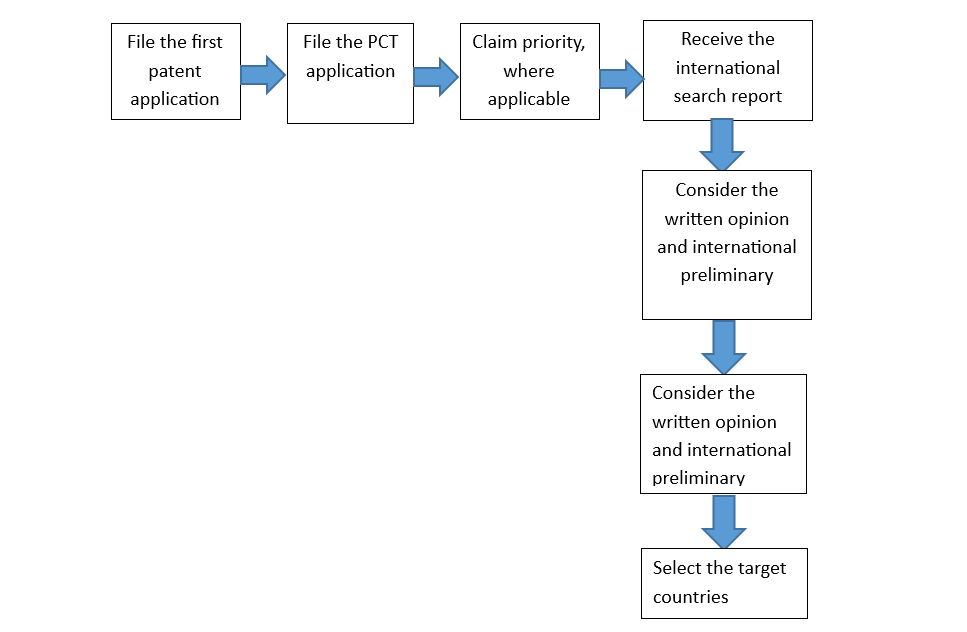
The Patent Cooperation Treaty patent application begins from the first stage of filing a patent application. The applicant can then submit a PCT application and can claim the priority from that particular application, depending on the required procedure and timeframe.
Afterward, the PCT procedure gives the international search and examination procedure. Finally, the applicant may decide on the nations or regions where he or she is commencing the national phase.
The steps of the international patent roadmap look like this:
The Timeline and Critical Deadlines
Proper management of time will be the secret behind succeeding during entry into this stage. Generally, the time allocated for the stage is 30 months from your earliest priority date but in some regions 31 months are allowed. In case of missing this deadline, you could lose the right to apply in that region. Consequently, it is Advised to inventors to create tracking methods way before this deadline.
- 30-Month Countries: Includes major patent offices such as the USPTO (United States), JPO (Japan), and KIPO (South Korea).
- 31-Month Countries: Includes regions like the EPO (European Patent Office), Australia, Canada, and India.
- Non-Extendable Limits: Most national offices treat these deadlines strictly and rarely grant extensions for administrative oversights.
Step-by-Step Guide to Entry
Beginning with the stage implies dividing your international application into individual applications that will be processed by your preferred patent offices. Start by determining the countries where you can sell or produce your invention. Then, seek patent lawyers since many jurisdictions require a local lawyer when dealing with foreign applicants.
Moreover, provide accurate translations of your specification, claims, and abstract, especially if the target patent offices use a different official language. Finally, file the appropriate national entry documents together with the necessary search and examination fees.
- Target Selection: Choose countries where your products are sold, where your competitors are active, and where your manufacturing takes place.
- Local Representation: Work with patent attorneys in each country to manage filings and handle all official communications.
- Translation Preparation: Make sure the full patent specification is translated correctly so that the meaning and scope of your claims stay the same.
- Fee Payment: Cover the filing fees, search fees and designation fees required by each patent office in the countries you’ve selected.
Cost Breakdown and Budget Strategy
Translation of papers and bringing lawyers from other nations may become an expensive affair in getting into the national market arena. Government charges for documentation vary drastically. The cost of translation of the documents increases depending on how long your specification is.
Thus, making a budget strategy at the beginning saves one from being financially strained by surprise costs. Cutting off extra countries before 30 months still remains the best way to keep costs under control.
- Official Fees: Set aside money for government charges related to filing, searching and examining your patent in each country where you plan to register.
- Attorney Expenses: Include costs for services provided by your main attorney and any local agents handling your case in foreign countries.
- Translation Costs: Budget for translating your patent documents, based on the number of words, for countries where English is not the official language.
- Maintenance Fees: Make room in your budget for fees that must be paid to keep your patents valid after they are granted.

Formulating an Effective Strategy
A successful PCT national phase entry fits into your big business goals. Instead of filing in every country, consider market size, enforcement strength, and where licensing could work well.
Also use the International Preliminary Report on Patentability, or IPRP, to fine‑tune your plan. If the search report shows prior art, revise your claims before you go to national offices to reduce prosecution delays.
- Market Alignment: Focus filings on countries with sales potential or major production hubs. Market Alignment helps us choose the places.
- IPRP Utilisation: Amend claims early to speed up prosecution and cut local lawyer fees. IPRP Utilisation means making changes.
- Commercial Value: Compare how strong enforcement is in target jurisdictions with the prosecution costs. Commercial Value tells us if the effort is worth it.
Conclusion
Through PCT applications, applicants have an opportunity to explore the possibility of protecting their inventions in several different jurisdictions. It must be noted that filing of PCT applications is not enough. Applicants have to assess their target markets, study search reports and enter the corresponding national or regional phases on time.
If the PCT applications are filed in an appropriate manner, they may serve as one of the tools to manage costs, deadlines and jurisdictional priorities. That is why applicants should consider the national-phase entry as a step in the patenting process. Through proper planning and timely actions, the PCT application may offer a comprehensive international strategy for patenting. In case you need any assistance, please contact us at Intellect Bastion LLP!
FAQs
1. What is the difference between the PCT international phase and the national phase?
The PCT international phase offers a centralised process for filing, searching, publishing and other examination steps. The PCT international phase helps applicants evaluate their invention and choose where they want to seek patent protection. I find the PCT international phase to be a step for many inventors.
The national phase starts when the applicant enters chosen countries or regional patent systems. Each patent office then reviews the application according to its laws and procedures.
- International phase: One PCT application and centralised procedures.
- National phase: proceedings before individual patent offices.
A PCT application does not itself grant a patent. Each national or regional office decides whether to grant protection.
2. What documents and translations are required for PCT national phase entry?
Applicants typically must provide the documents and information that the national or regional patent office requires. These requirements can differ depending on the country or region. So it’s important to look at the rules of each office before starting the filing process.
- A copy of the PCT application
- A national-phase request or the correct forms
- A translation of the application if needed
- The national filing fees
- Details of a patent attorney or agent if required
- A power of attorney if needed
- Priority documents, when applicable
- Sequence listings or other technical documents when needed
Each office has its own list, so checking the specific requirements helps avoid delays.
3. Can you extend the 30/31-month deadline for entering the PCT national phase?
The answer depends on the national or regional patent office. The PCT does not provide one universal extension that applies to every jurisdiction.
Some jurisdictions may provide remedies for late entry under specific circumstances. Therefore, applicants should not assume that they can extend the deadline. They should check the applicable national law and contact the relevant patent office or local patent professional promptly if they expect to miss the deadline.
4. Which patent offices can you file through during the PCT national phase?
Applicants can enter the national phase before the national or regional patent offices that accept PCT applications. The exact options depend on where the applicant wants patent protection and which regional systems apply.
5. How do PCT Article 19 and Article 34 amendments affect national phase examination?
PCT Article 19 gives the applicant the chance to change the claims after getting the search report. The applicant can send the claims to the International Bureau before the time runs out.
PCT Article 34 lets the applicant change the description, the claims and the drawings while the international preliminary examination is happening under Chapter II. These changes can help fix problems that come up during the international part.
The national patent offices make their own choices when they look at the application during the national-phase examination. They might take into account the changes made during the PCT process. Only according to their own country’s laws and rules. So applicants should make sure to check the PCT papers very carefully before moving into the national phase.
Author : Shubhra Pandey